
The Alchemy of Integrity: Why Lab-Grown is My First Choice
The Alchemy of Integrity
Why Lab-Grown Diamonds are My First Choice
By Greg Valerio | Founder of Valerio Jewellery & Ethical Jewellery Pioneer
In the world of high jewellery, "provenance" is a word often draped in romance but steeped in shadow. For over three decades, I have navigated the labyrinthine supply chains of the jewellery industry, from the mercury-polluted rivers of the Amazon to the high-stakes boardrooms of London. My journey has always been driven by a single, uncompromising question: Can a piece of jewellery truly be beautiful if its origins are ugly?
As a pioneer of Fairtrade Gold and a lifelong advocate for artisanal miners’ rights, my transition to championing lab-grown diamonds as a first-choice option often surprises traditionalists. Yet, for Valerio Jewellery, this is a logical evolution of my commitment to human rights and environmental justice.
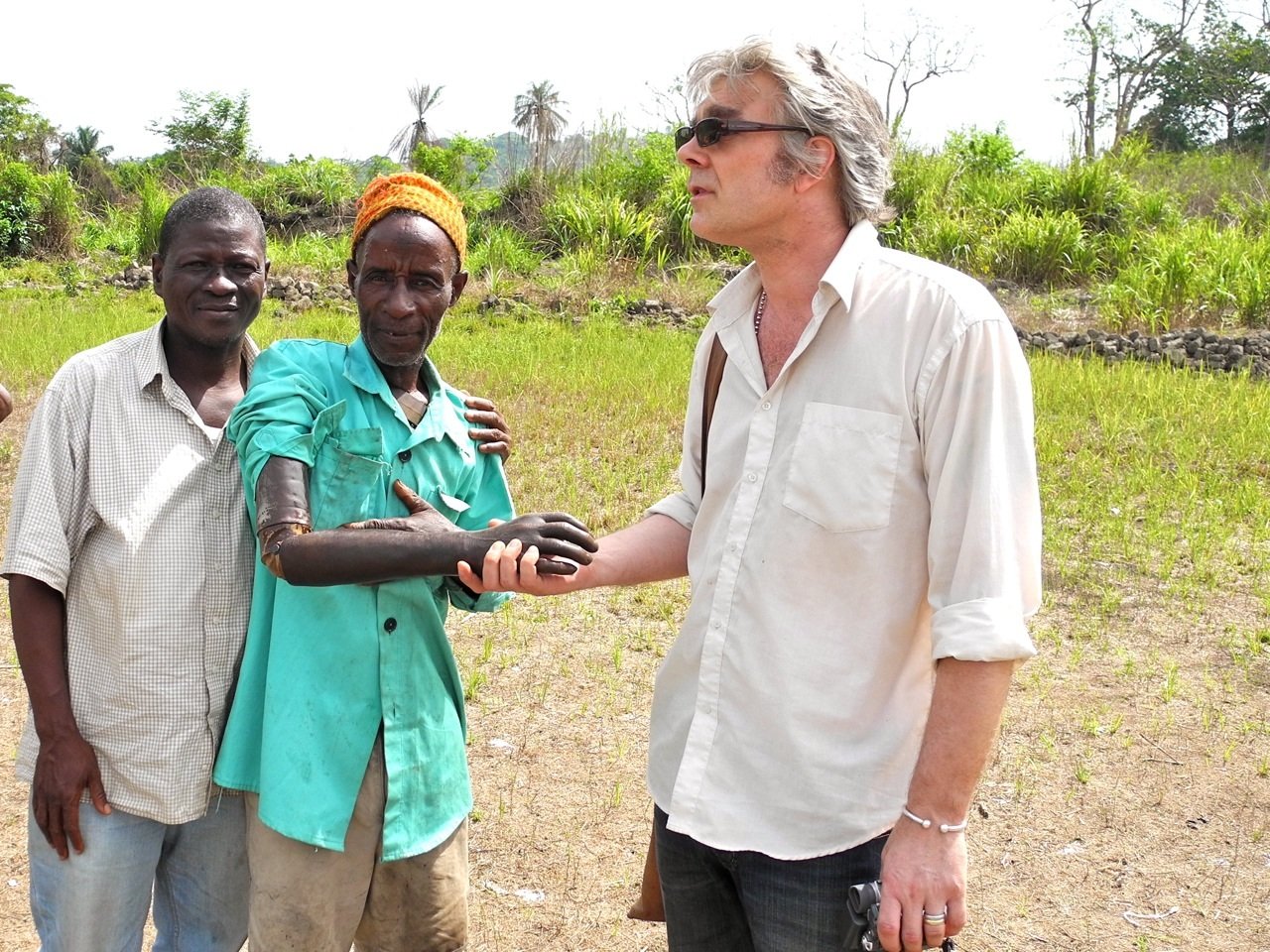
Greg meeting with a victim of the diamond wars in Kono District, Sierra Leone in 2011.
The Invisible Foundation: Why Artisanal Diamond Diggers are Left Behind
To understand why I have embraced lab-grown diamonds, one must first look at the 1.5 million artisanal diamond diggers who form the invisible foundation of the natural diamond trade. These men and women, working primarily in sub-Saharan Africa, are not just "poor"—they are systematically marginalized by a global value chain designed to exclude them.
The diamond trade is a predatory pyramid:
The Bottom: Artisanal diggers endure backbreaking labor in muddy pits, often for less than $2 a day.
The Middle: Middlemen and local dealers trap miners in cycles of debt bondage, buying stones at a fraction of their market value.
The Top: Luxury conglomerates reap the rewards of a "scarcity" narrative while providing little to no infrastructure or fair pay to the source.
Brand Ego vs. Human Values
This injustice sits squarely at the door of global luxury jewelry brands. For decades, these giants have prioritized brand ego—the preservation of a high-status, "natural" image—over the raw human values of equity. By hiding behind the thin veil of the Kimberley Process, which defines "conflict" so narrowly it ignores state-sponsored violence and systemic poverty, brands claim their hands are clean while the source remains in squalor.
Ethical Values: The Lab-Grown Advantage
Choosing lab-grown diamonds isn't just about avoiding the "bad"; it’s about embracing a proactive set of ethical values. At Valerio Jewellery, our first-choice philosophy is built on three pillars:
1. Radical Transparency
In the traditional trade, a diamond passes through dozens of hands. With lab-grown diamonds, the chain of custody is short and verifiable. These stones are chemically, physically, and optically identical to mined diamonds (C in its purest crystalline form), but with a digital footprint that ensures no human rights were violated.
2. Sustainable Luxury
Luxury should be a reflection of the best of the human spirit. By utilising lab-grown diamonds, we make high-quality, high-spec stones (VS+ clarity and D-F colour) accessible to those who refuse to compromise their values for a status symbol.
3. Environmental Preservation
Mining is a violent act against the Earth. In contrast, lab-grown diamonds offer a path to circular luxury.
Addressing the Carbon Footprint: The Truth About Energy
One of the most frequent critiques levelled against sustainable diamonds is their carbon footprint. Creating a diamond requires immense heat and pressure (T > 1000degrees C).
However, in ethical jewellery provenance, I must urge a nuanced view. We must compare the actual impact of a lab to the catastrophic impact of a mine:
Beyond the Numbers: The Ecological Narrative
When we compare the environmental cost of a diamond, we are choosing between two fundamentally different relationships with our planet. On one hand, we have the legacy of extraction; on the other, the promise of innovation.
The Heavy Toll of the Earth Moved
In the traditional mining sector, the cost of a single carat isn't just measured in dollars—it’s measured in displacement. To find one natural stone, mining operations must excavate and process roughly 250 tonnes of earth. This isn't just "dirt"; it is topsoil, habitat, and the literal skin of our ecosystems. This process leads to permanent deforestation and the scarring of landscapes that may never recover.
In contrast, a lab-grown diamond requires zero earth displacement. We are growing the crystal, not digging for it, ensuring that the local flora and fauna remain undisturbed.
The Lifeblood of Communities: Water
Water is our most precious resource, yet industrial mining is a thirsty business. A mined diamond typically requires about 126 gallons of water per carat, often in regions where local communities already face severe water scarcity. This water is frequently contaminated by runoff, affecting downstream health.
Lab-grown diamonds, however, operate in a controlled, closed-loop environment. Their water usage is minimal and often fully recycled, ensuring that luxury doesn't come at the expense of a community’s hydration.
Carbon Potential and the Energy of the Future
The most discussed metric is the carbon footprint. It is true that lab-grown diamonds require immense energy to simulate the Earth's mantle (T > 1000degrees C). But there is a vital distinction: Mining creates a permanent ecosystem loss that cannot be "offset." The carbon sequestration capacity of a razed forest is gone forever.
The energy used in a laboratory, however, is an engineering challenge. Unlike a hole in the ground, a lab can be carbon neutral, powered entirely by the sun and the wind. We aren't just making diamonds; we are refining the way we power our future. I want to be very honest here, this is work in progress, securing a carbon neutral lab diamond, but like all our ethical progress we will arrive at our desired destination.
At Valerio Jewellery, we seek out sources who are certified by organisations like SCS Global Services, ensuring they utilise renewable energy sources like solar or wind power. The carbon issue in labs is a technical challenge being solved; the human issue in mining is a systemic failure being ignored.
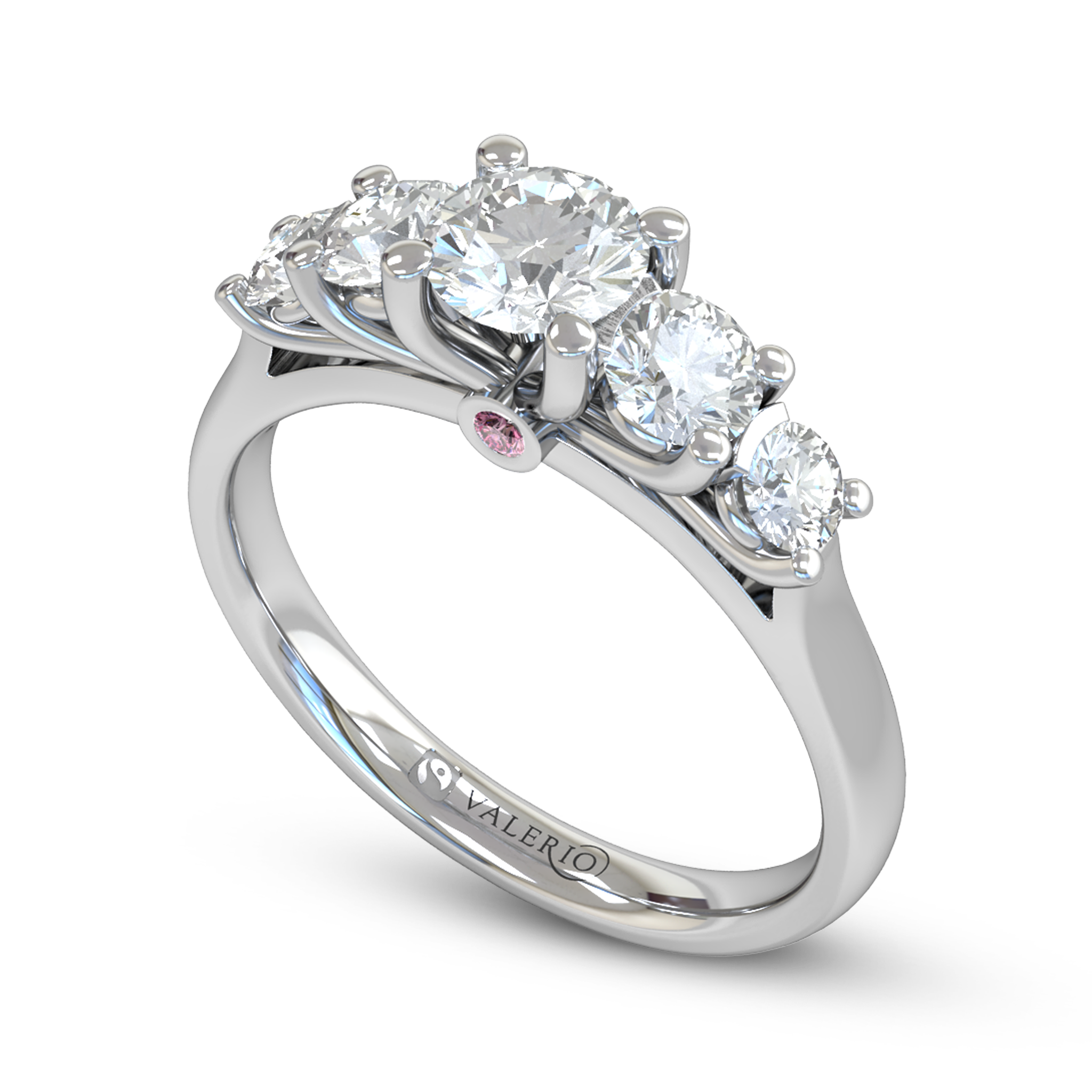
Lab Grown Diamonds in a tulip setting. Ethical Diamond Fairtrade Gold Engagement Ring
A Talisman of Truth
Jewellery is more than an accessory; it is a talisman. It carries the energy of its journey from the source to your skin. If that journey is marked by exploitation and "brand ego," the beauty of the stone is hollow.
By making lab-grown diamonds our first choice, we are choosing a future where love doesn't require a trade-off with justice. We are choosing a world where "forever" refers to the sustainability of the planet and the dignity of the people who inhabit it.