The Fairtrade Gold ReLOVEution
The Fairtrade Golden ReLOVEution
Why Fairtrade Gold Remains the North Star of Ethical Jewellery
For decades, and to a greater degree today, the jewellery industry operated behind a glittering, opaque veil. To the consumer, a gold ring was a symbol of love, a milestone of achievement, or a family heirloom. But behind that polished surface lay a reality that the industry preferred to keep in the shadows: systemic poverty, devastating mercury pollution, and the exploitation of millions of artisanal and small-scale miners (ASM).
When I began my journey in the late 1990s, the "establishment" told me that tracing a single gram of gold from a remote pit to a finished ring was an "impossible fantasy." They said the supply chain was too complex, the miners too disorganized, and the risks too high.
They were wrong.
The journey from those early days of skepticism to the global standard we see today hasn’t just been about creating a marketing label. It has been about restorative justice. It’s about ensuring that the gold on your finger doesn’t cost someone else their health, their land, or their fundamental dignity.
Heretical Jewellery: The Origins of a Movement
My path into this revolution began in 1996 when I founded CRED Jewellery. At the time, the concept of "ethical jewellery" was practically non-existent. My wake-up call came after witnessing "indentured slave labor" in Indian garnet mines. Seeing the human cost of our luxury items sparked an obsession: I wanted a clean supply chain, or I didn't want to be in the business at all.
The true "lightbulb moment" occurred in 2004 in the heart of the Chocó rainforest in Colombia. I traveled there to meet the pioneers of the Oro Verde (Green Gold) initiative. I became the first international jeweller to buy their gold—a modest 50 grams—which I turned into four wedding rings.
Those four rings were my "proof of concept." They stood as tangible evidence that a direct, honest, and transparent relationship between a miner and a jeweller was not only possible but commercially viable.
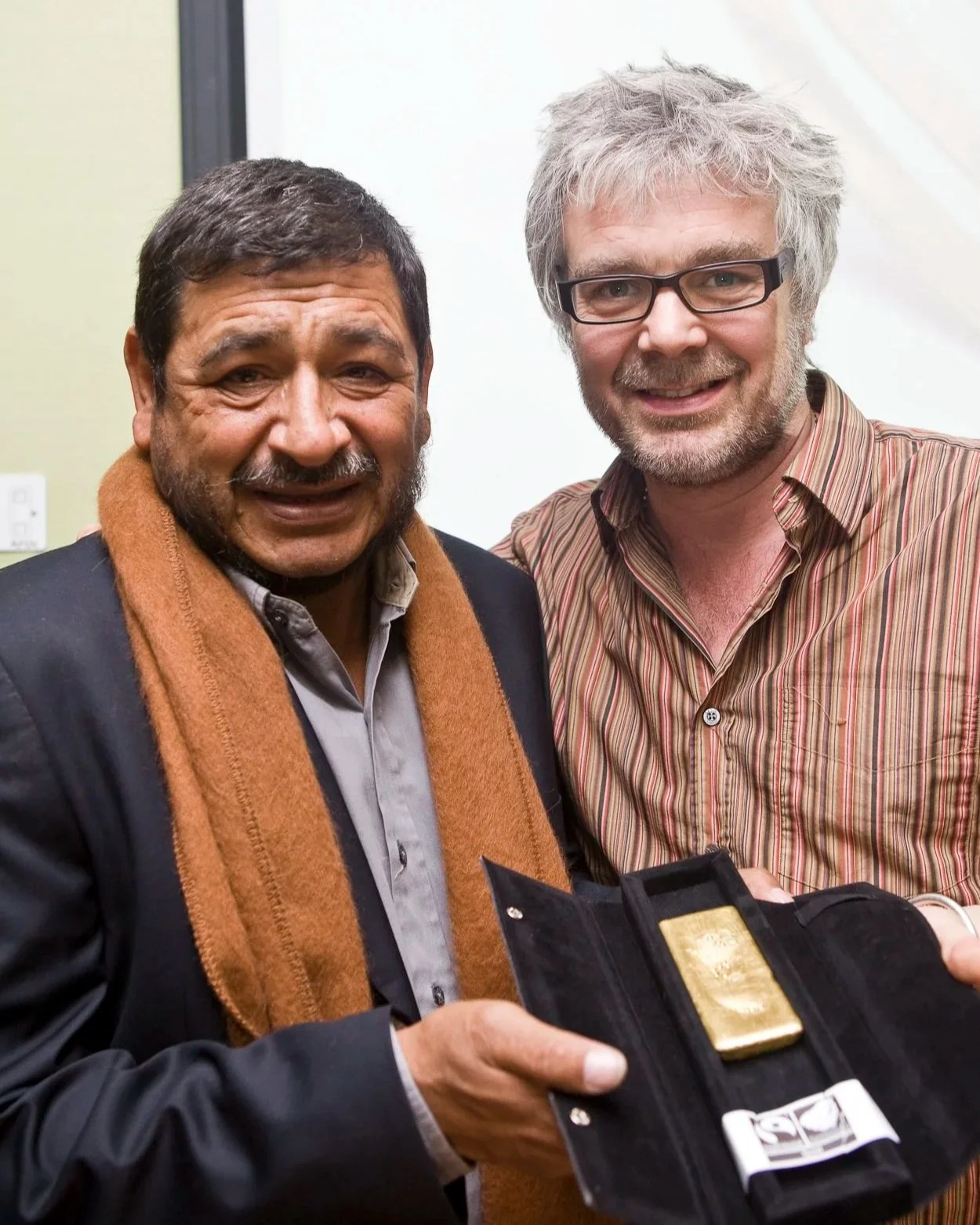
Greg Valerio MBE and Manuel Rivas holding the world's first kilo bar of Fairtrade Fairmined Gold in 2011.
Scaling the Mountain
Proving it could work on a small scale was only the beginning. We needed a systemic shift. In 2005, I co-founded the Alliance for Responsible Mining (ARM) to draft "Standard Zero"—the world’s first rulebook for ethical mining.
The next five years were a marathon of lobbying. We had to convince the global Fairtrade movement—an organization traditionally focused on coffee, bananas, and cocoa—that a mineral could carry the same ethical weight. It was a battle of wills against bureaucracy and industry inertia. Finally, in February 2011, we officially launched the Fairtrade Gold Standard. Seeing that first one-kilogram bar of Fairtrade Fairmined gold was more than a professional achievement; it was the birth of a new era.
The Impact: A Tale of Two Pits
To understand the power of the "Golden Revolution," we must look past the gold itself and into the lives of the people who pull it from the earth. While artisanal gold accounts for 20% of the world’s supply, it represents 90% of the gold mining workforce. To illustrate the impact of Fairtrade, imagine two mining communities, side-by-side, separated only by the path they choose to follow.
The Traditional Path: A Cycle of Dependency
In a traditional, uncertified artisanal mine, the miner is caught in a "race to the bottom." They work in a disorganized, informal state, making them easy targets for predatory middlemen—the "coyotes." These buyers often pay as little as 60% of the gold's true value, knowing the miner has no other way to reach the global market.
There is no safety net here. In this "wild west" environment, if a tunnel collapses or a miner falls ill from the unregulated dumping of mercury into the local water source, the community bears the cost alone. In this world, gold is often a curse that drains the land and keeps families in a cycle of systemic poverty.
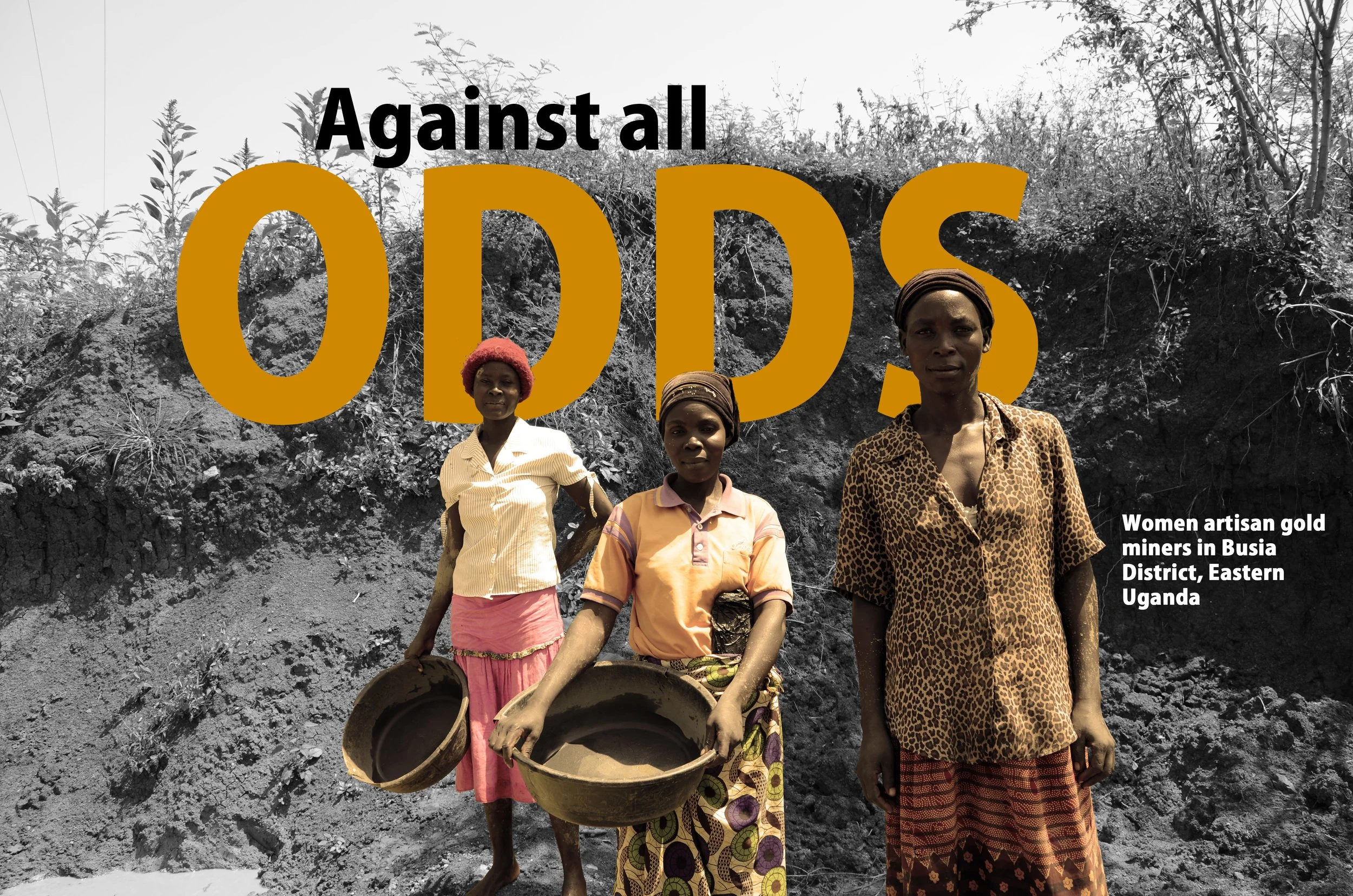
Woman AS Miners in Uganda who worked on the Fairtrade Gold Programme.
The Fairtrade Path: A Beacon of Sovereignty
Economically, the change is transformative. Instead of being cheated, they receive 95% of the LBMA fix, ensuring they receive nearly every cent of the gold's global value. On top of that, the $2,000 per kilogram Premium acts as a community war chest. While the traditional mine is struggling to survive, the Fairtrade mine is building a school, piping in clean water, or investing in closed-loop chemical systems that keep their rivers clean for the next generation.
The Four Pillars: How Fairtrade Gold Reclaims Human Rights
Fairtrade Gold is often misunderstood as "charity." It is not. It is a sophisticated commercial relationship based on mutual respect. We call it "Trade, not Aid." To ensure this trade is truly fair, the standard is built upon four non-negotiable pillars that protect both the person and the planet.
1. Economic Justice
In the traditional gold market, miners are often at the mercy of "coyotes" or predatory middlemen who buy gold at 60% or 70% of its actual value. Fairtrade changes the math:
Fairtrade Minimum Price: Miners are guaranteed 95% of the London Bullion Market Association (LBMA) fix.
The Fairtrade Premium: On top of the price of gold, miners receive a $2,000 USD per kilogram Premium. This isn't a bonus for individuals; it is community money. It is used for schools, healthcare clinics, or clean water projects as decided by the community itself.
2. Social Democracy
Isolation is the enemy of the miner. To be Fairtrade certified, miners must form legal cooperatives. This organizational structure gives them a collective voice. It allows them to negotiate with governments, protect their land from illegal "grabs," and ensures that every member has a vote in their future. It transforms a group of laborers into a democratically empowered community.
3. Labour Rights and Human Dignity
We brought International Labour Organization (ILO) standards directly into the pits. This means:
Zero Tolerance for Child Labour: Ensuring children are in classrooms, not mine shafts.
Mandatory Safety Gear: Providing PPE (Personal Protective Equipment) to prevent the chronic respiratory issues and accidents that plague uncertified mines.
Gender Equality: Recognizing and paying the women who have been the backbone of the mining industry for centuries but have historically been denied equal pay and ownership.
4. Environmental Stewardship
Gold mining is the world's largest source of man-made mercury pollution. Fairtrade Gold provides a rigorous roadmap to eliminate this neurotoxin.
Closed-Loop Systems: If chemicals like cyanide are used, they must be managed in strictly controlled, closed-loop systems to prevent leakage into the water table.
Ecological Gold: For those who go entirely chemical-free and focus on reforestation, we created the "Ecological" tier—the gold standard of environmental mining.
The Impact: Power in the Numbers
The "Golden Revolution" is no longer a fringe experiment; it is a global movement with measurable impact. To understand why this matters, we have to look at the scale of the industry:
20% of the Supply, 90% of the Labor: While artisanal and small-scale mining (ASM) accounts for about 20% of the world's annual gold supply, it represents roughly 90% of the gold mining workforce. That is tens of millions of people whose lives are directly impacted by the conditions of the mine.
The 2024 Milestone: In 2024 alone, over 1,280 kg of Fairtrade Gold moved through the global market.
Expanding Horizons: This isn't just a South American story. In Uganda, I was privileged to help coordinate the certification of the Syanyonja Cooperative—Africa’s first Fairtrade Gold source, alongside Environmental Woman in Action (EWAD). These mines served as "beacons of excellence," proving to neighbouring communities and governments that ethical mining is more profitable and sustainable than the "wild west" alternative.
The LOVEution: From the North Star to the Holy Grail
If Fairtrade Gold has served as our North Star—a reliable, fixed point of reference for ethics and justice—then it has been leading us toward a singular destination: PeaceGold. While Fairtrade established the baseline of "Trade not Aid," PeaceGold represents the logical and spiritual progression of that work. It is the "Holy Grail" of the industry. PeaceGold takes the rigor of the Fairtrade standard and applies it to the most challenging contexts on earth: conflict-affected and high-risk areas. It is gold that doesn't just avoid harm; it actively heals. It is a restorative model where the gold trade becomes a mechanism for peacebuilding, decommissioning conflict, and returning the wealth of the land to the hands of the peaceful. We didn't build the Fairtrade foundation just to stop at "certified"; we built it so we could eventually reach a world where gold is a literal instrument of peace.
The "ReLOVEution" Continues
We have successfully "flipped" the industry. What was once ridiculed as a radical "heresy" is now the benchmark for any jeweller with a conscience. From small independent boutiques to major international houses, the question is no longer "Why buy Fairtrade?" but "Why aren't you?"
However, our work is far from finished. The majority of the world's gold is still "dirty," tainted by conflict, environmental destruction, or human rights abuses. The transition to a fully ethical industry requires the most powerful force in the market: you.
Every time you choose a piece of jewellery hallmarked with the Fairtrade Gold stamp, you aren't just buying a luxury item. You are casting a vote for a world where beauty is never born from suffering. You are providing a child with an education, a woman with a fair wage, and a community with the tools to protect their environment.
We have the power to turn the jewellery industry into a force for global good. Let’s keep making "good trouble" until every gram of gold in every window on every high street is a "clean" gram.
To view Fairtrade Gold Jewellery visit Shop Jewellery
Peace and Justice,
Greg Valerio MBE