The Untold Origins of Fairtrade Gold & CRED Jewellery
Oro Verdé Gold - the first batch of gold I bought back from Colombia that sparked the change.
In the autumn of 1995, if you had walked into the And Albert shop on South Street in Chichester and climbed the stairs to the upper floor, you would have encountered something quiet, unpretentious, but fundamentally radical. Tucked away in that upstairs unit, generously carved out for me within that vibrant repository of global craft, sat modest collections of hand-carved, hand-wrought silver and traditional artisanal jewellery—pieces I had personally brought back from early community trade partnerships in Ethiopia, the bustling backstreets of Nepal, and small artisan workshops across India.
And Albert was not just any shop, and its support was not a random stroke of luck. It was the creation of David Murden, a true pioneering proprietor and social entrepreneur in his own right. Long before "ethical supply chains" became a fashionable buzzword in corporate boardrooms, David understood that trade could be a potent vehicle for social justice, human dignity, and poverty alleviation. When I approached him with raw enthusiasm and early imports from marginalised artisans, David didn't see commercial risk; he saw a shared mission. By granting me that upstairs space, he gave a nascent movement its very first home.
At the time, the mainstream jewellery trade had no interest in where metal came from, who had dug it out of the dirt, or whose fingers had shaped it into ornament. The trade operated—as much of it still does—on a posture of wilful blindness. Gold was gold, silver was silver, and diamonds were forever; the human cost of extraction was neatly washed away behind polished glass, expensive branding and the antiseptic bright white glow of LED’s.
To the established high street jeweller, a ring was simply a commodity designed to mark a milestone or an emotional moment. But to those of us who had looked directly into the eyes of artisan miners and marginalised craftspeople in the Global South, those gleaming objects told a very different, far darker story.
That small upstairs unit in Chichester was not merely a retail experiment. It was a declaration of intent. It was the seedbed of what would become CRED Jewellery, and ultimately, the catalyst for the global Fairtrade Gold movement. But to understand how David Murden’s shop in West Sussex turned into a campaign that challenged the narrative of exclusive luxury jewellery, you have to understand the underlying truth that set the whole thing in motion: the plight of the child in distress.
Unmasking the Supply Chain: The Reality of Artisanal Mining
When people think of mining, they often picture massive open-cast industrial pits, giant yellow dump trucks, and corporate engineering. But parallel to that industrial behemoth exists a vast, invisible army: artisanal and small-scale mining (ASM). Today, upwards of 40 million people rely directly on artisanal mining for their survival, producing roughly 20% of the world’s gold supply. In the mid-1990s, this sector was almost entirely ignored by international development agencies, trade bodies, and environmental campaigners alike.
When I began travelling to meet with artisanal communities in Africa, South Asia, and South America, what I witnessed was not an exotic, romantic cottage industry. It was severe, grinding poverty. It was human beings working in conditions of acute vulnerability, stripping earth with hand tools, working without safety gear, and inhaling toxic dust for the dollar a day treadmill.
Most haunting of all was the presence of children.
In many mining encampments, children were not merely playing on the margins of the pits; they were embedded in the production process. Young boys descended into unreinforced, precarious shafts that could collapse at any moment. Young girls sat by riverbanks or stone mortars, sorting gravel, crushing ore by hand, and handling liquid mercury with bare hands to form amalgams with gold dust.
Mercury is a potent neurotoxin. When burned off over open fires—often inside family kitchens—the vapor invades the lungs and central nervous system. Children are uniquely susceptible to its catastrophic effects, suffering permanent neurological impairment, physical stunting, and developmental destruction.
Why were children in the pits? Not because their parents were cruel or uncaring, but because structural poverty left families with no alternative. When the price paid by middleman buyers—the "cash for gold" predators operating on the fringes of these communities—is deliberately suppressed, an adult worker cannot earn enough to buy basic staples. The family must mobilise every pair of hands to survive.
To look at a pristine gold wedding ring in a high street shop window in London or New York, knowing that its provenance was linked to the poison, exploitation, and robbed childhoods of artisanal mining communities, created a moral dissonance I could not ignore. The trade was complicit in a quiet, systemic crime. The luxury industry was thriving on the invisible suffering of children.
The Birth of CRED Jewellery in Chichester
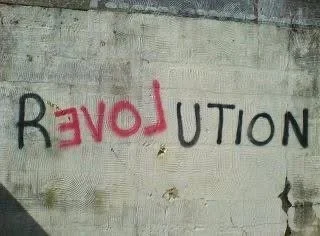
It was out of this moral crisis that CRED Jewellery was born. The premise was simple, yet revolutionary for the 1990s: Could we create a commercial jewellery business that placed human rights, environmental stewardship, and radical supply chain transparency at its very core?
Before CRED had a flagship boutique or formal trade distribution, it had that single upstairs unit at And Albert in Chichester in 1995.
Thanks to David Murden’s vision, And Albert was a haven for those who believed that trade could be a tool for justice rather than exploitation. By offering me space on that upper floor, David provided the crucial bridge between abstract activism and real-world commerce. The pieces we sold were directly sourced from community trade partners in Ethiopia, Nepal, and India. Every bracelet, pendant, and ring brought back was accompanied by a direct relationship with the artisan who made it. We paid fair prices upfront, ensured safe working conditions, and invested back into community welfare.
Selling those early pieces in Chichester taught us a fundamental lesson: consumers cared. When presented with a clear choice between an anonymous, potentially toxic product and an object of beauty that carried dignity, hope, and fair remuneration for its maker, people chose dignity every time.
However, artisan silver craft was only the first step. The real beast of the industry—the element that dictated global power, wealth, and systemic exploitation—was gold.
If we were truly going to transform the industry and rescue children from the toxic grind of informal pits, we had to confront the gold supply chain directly. We needed to prove that a fully traceable, ethical gold supply chain was not an impossible idealist's dream, but a practical commercial reality.
The Katharine Hamnett Connection
By the late 1990s and early 2000s, the ethical trade movement in the UK was gathering momentum, but jewellery remained stubbornly behind. Fairtrade coffee, tea, and bananas were finding their way onto supermarket shelves, but the luxury and fashion sectors still treated ethics as an unwelcome nuisance.
To break through the indifference of the mainstream trade, we needed to speak a language that was loud, culturally relevant, and impossible to ignore. We needed to disrupt the narrative.
Katharine was already a legendary figure in British fashion—a pioneer who had redefined fashion as a vehicle for political commentary. Famous for her iconic oversized slogan T-shirts ("CHOOSE LIFE", "EDUCATION NOT WAR", "CLEAN UP OR DIE"), she had famously worn a protest T-shirt to meet Margaret Thatcher at Downing Street in 1984. Katharine understood that fashion was not merely aesthetic; it was inherently political.
When Katharine and I connected, there was an immediate meeting of minds and hearts. She understood what we were attempting to achieve, and she recognised the deep injustice embedded within fashion and jewellery supply chains. She saw that the glitter of luxury was built on an underclass of exploited workers and suffering children.
To support our campaigning work and draw stark public attention to the reality of artisanal mining, Katharine collaborated with us to create a statement that would hang directly in shop windows and hit the high street with an uncompromising message.
The framed window poster—printed in bold white lettering against a stark dark backdrop—carried the message that would define our campaign:
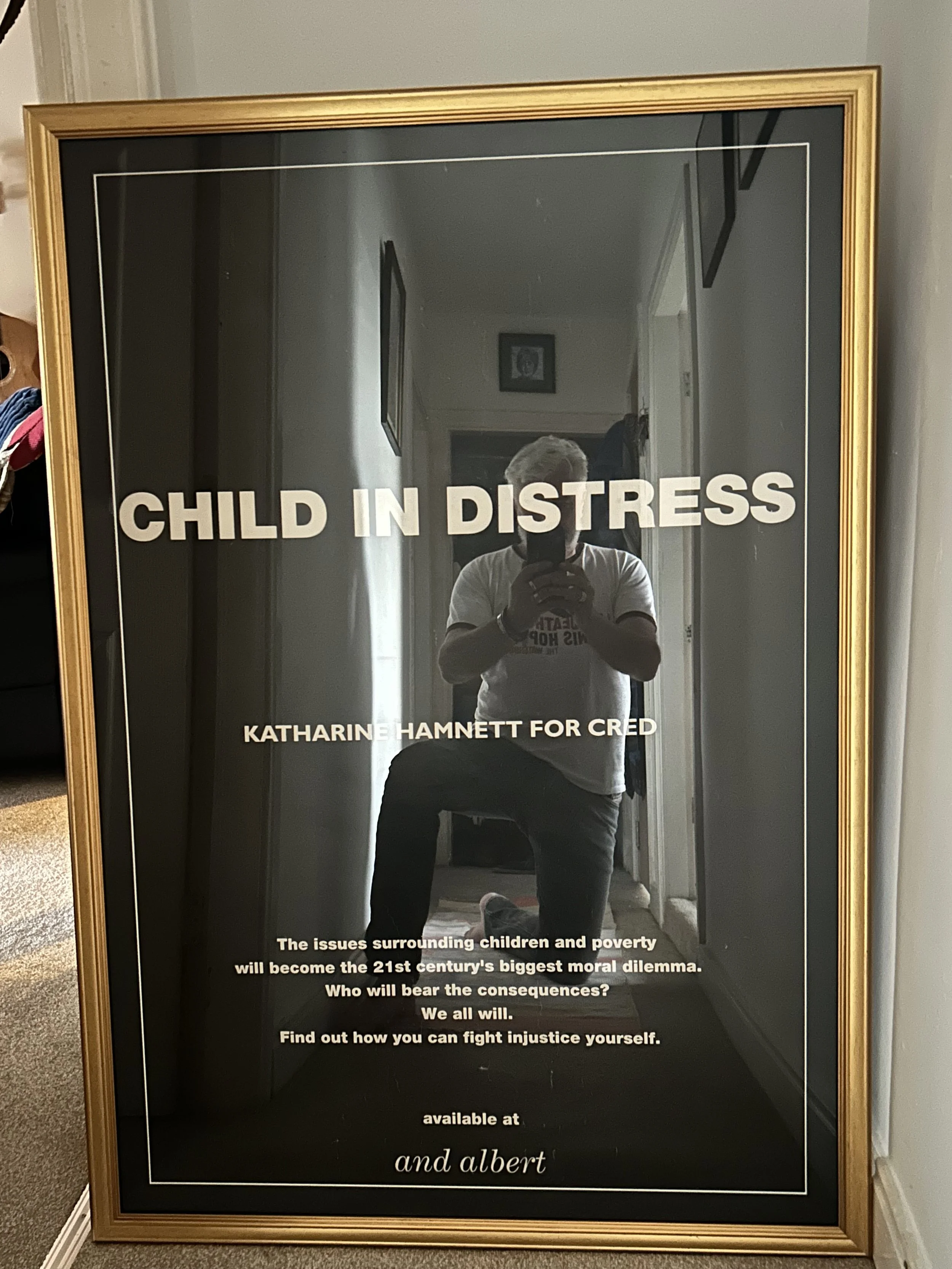
That window display poster was a fairly blunt, uncompromising mirror held up to customers and the fashion establishment. It took the polite, sterile conversations about "supply chain management" and stripped them down to their moral essence. With no social media amplification available at the time, we relied on direct unambiguous messaging.
When a UK fashion icon like Katharine Hamnett aligned with a pioneering fair trade initiative like CRED, anchored right there in David Murden's And Albert shops, it created a cultural moment. Suddenly, journalists and high-street shoppers could no longer treat fair trade as the exclusive domain of brown rice and hemp sacks.
The Child in Distress campaign united three distinct powerful elements that need to be present in any effective campaign,
Grassroots Activism & Fair Trade Practice: Rooted in our direct relationships with mining communities and early craft partners from Ethiopia to South America.
Authenticity & Authority: Driven by Hamnett’s design pedigree and sharp political edge.
Commercial Execution: Led by CRED Jewellery and hosted by David Murden at And Albert, proving on the high street that ethical luxury was commercially viable.
The poster did what all great design should do: it forced a confrontation with the truth. It asked every passerby on South Street in Chichester and across the UK in the other And Albert shops a simple question: Who will bear the consequences? We all will.
The Unexpected Catalyst: Meeting Harriet Lamb
It was at Katharine’s house that another crucial piece of the puzzle fell into place. I happened to be there when Harriet Lamb, then the Managing Director of the Fairtrade Foundation in the UK, arrived. Harriet was visiting Katharine to enlist her support and profile for the imminent launch of Fairtrade Cotton—bringing ethical certification to high street apparel.
As we sat together in Katharine's living room, our conversations naturally drifted from cotton fields to gold pits. At the time, the Fairtrade Foundation was focused almost entirely on agricultural crops—tea, coffee, cocoa, bananas, and now cotton. Hard, extracted minerals like gold were completely uncharted territory. Bringing bullion into the Fairtrade system presented a formidable challenge to conventional policy; it meant stepping away from farms and stepping into dusty, complex, and often dangerous mining encampments.
When Harriet Lamb walked into Katharine Hamnett’s house that day, she came looking for a fashion icon to save cotton farmers in West Africa. She walked out offering to help us pioneer the world's first certified fair trade gold. Harriet was committed to stretching the boundaries of the Fairtrade movement — moving from bananas and coffee into the dark, hidden world of artisanal gold pits. Sitting in Katharine's room, faced with the stark reality of what child miners were enduring, Harriet didn't see an impossible bureaucratic obstacle; she saw a moral duty.
Harriet didn't shrink from the complexity. She listened intently, grasped the human stakes, and saw the profound imperative of extending the Fairtrade mark to artisanal miners. Right then and there, a friendship was forged. Harriet became a rock-solid advocate, a formidable institutional ally, and a tenacious champion for the certification of Fairtrade Gold. Without her willingness to push the boundaries of what Fairtrade could achieve, the long journey toward a formal, globally recognized gold standard would have taken decades longer.
Dismantling the Smoke and Mirrors: How We Rebuilt the Chain
If you want to understand why the conventional gold trade was so hostile to fair trade at first, you have to realise that secrecy was not a flaw in the old system—it was its main feature.
The traditional gold market was engineered to erase memory. An artisanal miner in Colombia or Congo digs gold out of the earth with simple hand tools; a local buyer (middle man) buys it for a discount; a regional trader blends it with gold from three other sources; an international exporter ships it to a refinery where it is melted into massive, anonymous bullion bars alongside scrap metal and conflict gold. By the time that metal arrives at a bench jeweller in London, Birmingham, or Paris, its story has been completely erased. The blood, the mercury, the child labour, the environmental wreckage—all of it is sanitised away in the furnace.
That anonymity was the trade’s fortress. As long as nobody could trace a specific ring back to a specific pit, no one had to take responsibility for the child standing barefoot in the toxic sludge.
To break that fortress, we couldn't just throw rocks at it from the outside; we had to build an entirely new, fully transparent path from the pit to the palm.
Where the old trade relied on middleman exploitation, paying miners a fraction of the metal's true worth, we built direct relationships with organised artisanal mining communities—starting in places like the Chocó in Colombia and expanding across South America and Africa. We guaranteed them a fair percentage of the international spot price, plus a dedicated Fairtrade Premium for community development.
Where the old trade looked the other way on child labour and toxic contamination, our model made safety and child protection strict, non-negotiable prerequisites. If a community wanted to trade with us, the children had to be out of the shafts and in school, and mercury handling had to be strictly controlled or eliminated altogether.
And most crucially, where the old supply chain deliberately melted everything together into anonymous obscurity, we established an unbroken, audited Chain of Custody. Every gram of gold was segregated at the mine, kept separate through export, refined in dedicated batches, and delivered to our workshops with its identity completely intact.
When a community receives a fair price for its gold, child labour stops being an economic necessity. The Fairtrade Premium builds schools, funds healthcare clinics, installs clean water filtration systems, and enables parents to keep their children in classrooms rather than underground pits.
Ethics in trade is not a warm, fuzzy sentiment or a clever branding exercise. It is an exacting, stubborn operational discipline. CRED proved that gold did not have to carry a curse—that with enough determination, you could hand a customer a gold ring and tell them the name of the village, the stream, and the people who brought it into the light.
The Unfinished Business of Ethical Trade
Looking back across three decades of social entrepreneurialism, campaigning, design, and activism, it is tempting to view the story as a neat, completed triumph. We proved the point. We built the Fairtrade Fairmined supply chain. We launched the standard. We changed the conversation forever.
But candour demands that we acknowledge how much work remains.
Artisanal child labour in gold mining has not disappeared. In remote pockets of the world—from eastern Democratic Republic of Congo to unregulated stretches of the Amazon basin—millions of children still enter dangerous shafts every morning. Illicit financial flows, conflict financing, environmental degradation, and corporate greenwashing remain pervasive across global mineral markets.
Too many mainstream brands still rely on superficial "recycled gold" claims—using recycled metal as a convenient shield to avoid engaging with vulnerable mining communities that desperately need fair trade investment. Recycled gold does not rescue a single child from an informal gold pit in Africa or South Asia; only direct, radical, ethical engagement with artisanal mining communities can do that.
The lesson of the Child in Distress poster hanging in And Albert is as urgent today as it was in 1995:
    HUMAN DIGNITY vis a vis COMMERCIAL CONVENIENCE

We must continue to ask the hard questions of our supply chains:
Who extracted this material?
Under what physical and economic conditions did they work?
Did the extraction of this metal build up a community or destroy it?
Is there a child's health or education buried inside this object?
The Legacy of the Movement.
When I reflect on those early days in Chichester—setting up our modest wooden display upstairs at And Albert, adjusting hand-wrought silver pieces from Ethiopia, Nepal, and India—I am reminded that every great movement begins with small, courageous acts of solidarity and vision. Without David Murden’s pioneering willingness to open his doors to an untried concept, that spark might never have caught flame.
We did not have millions of pounds in venture capital. We did not have multi-national marketing campaigns. What we had was conviction. We had the partnership of courageous artisan producers who trusted us with their work, the generous support of local craft champions in West Sussex like David Murden, the creative brilliance of Katharine Hamnett, and the unshakeable institutional advocacy of Harriet Lamb.
That combination—fair trade principles, fashion disruptors, social entrepreneurs, bold institutional leadership, and pioneering jewellers—laid the foundation for an ethical movement that has altered the global jewellery trade.
A ring is a symbol of love, commitment, and human connection. It should never be a symbol of hidden suffering. Every time an artisan goldsmith sits at a bench to shape a piece of certified Fairtrade gold, or a customer chooses a ring with a transparent supply chain, they are honoring the promise that began thirty years ago: to stand against exploitation, to demand justice in trade, and to ensure that no child’s future is traded away for a piece of gold.
Chronology of the Ethical Jewellery Movement
1995 — The First Footprint in Chichester: David Murden gives Greg Valerio space in the upstairs unit of And Albert on South Street, Chichester, providing the retail home for early community-traded artisanal jewellery brought from Ethiopia, India, and Nepal.
1996 — Incorporation of CRED Jewellery: CRED Jewellery is founded, establishing the world's first commercial jeweller dedicated exclusively to radical supply chain transparency, human rights, and fair trade practices.
Early 2000s — The Child in Distress Campaign: Fashion icon Katharine Hamnett joins forces with CRED Jewellery to launch the Child in Distress campaign. The window display posters and slogan T-shirts highlight child poverty and mercury toxicity in artisanal mining, confronting high street fashion with the moral realities of luxury supply chains.
Mid-2000s — Meeting Harriet Lamb: Greg Valerio meets Harriet Lamb, Managing Director of the Fairtrade Foundation, at Katharine Hamnett’s house while Harriet is seeking Katharine's backing for the Fairtrade Cotton campaign. Harriet embraces the cause of artisanal gold and becomes a rock-solid champion for certifying ethical bullion (chronicled in her book, Fighting the Banana Wars).
2005 — Creation of the Alliance for Responsible Mining (ARM): Greg Valerio, one of three co-founders the Alliance for Responsible Mining (ARM), bringing together miners, civil society organisations, and ethical trade advocates to formulate the world's first formal standards for artisanal and small-scale gold mining.
2011 — Official Launch of Fairtrade Fairmined Gold: The international Fairtrade & Fairmined Gold Standard is formally launched in London, creating the world’s first independently certified ethical gold standard for the global jewellery trade.
2013 to present day - PeaceGold represents a maturing approach to artisanal gold mining by moving beyond traditional aid models into a commercial, business-partnership structure that directly integrates conflict-affected miners into transparent, traceable, and mercury-free supply chains. By formalising artisanal cooperatives and creating shared economic and social value, it transforms gold extraction from a driver of exploitation into a sustainable catalyst for peace, community development, and regional stability.
Greg Valerio MBE is an ethical jeweller, social entrepreneur, and campaigner. He founded CRED Jewellery and PeaceGold™ and was instrumental in establishing the Fairtrade Gold Standard.